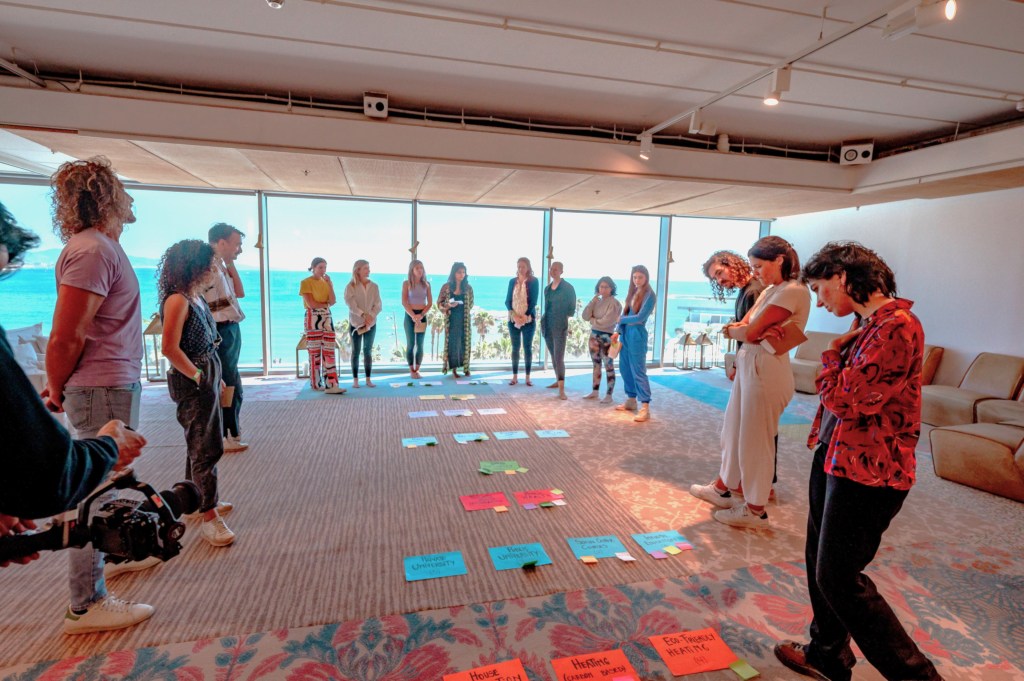
A workshop designed in collaboration with Tanguy Tomes (D4C SPain) to bridge the gap between climate activists and the critical issue of sovereign debt, highlighting its colonial roots and its impact on the climate crisis. Participants will be introduced to the Debt for Climate (D4C) movement, its origins, and strategies.
Workshop Description
This workshop, designed in collaboration with Debt for Climate (D4C), explores the intricate relationship between the climate crisis and sovereign debt, with a special focus on its colonial roots and its impact on national budgets. By using an engaging, game-based format, the workshop aims to educate participants—particularly those interested in climate issues but unaware of the consequences of sovereign debt in the Global South—on these complex dynamics. Participants are also introduced to the Debt for Climate movement, learning about its origins and strategies. The workshop offers a step-by-step guide for replication to foster movement-building and future Debt for Climate initiatives.
Methodology
This workshop recognizes that knowledge isn’t purely intellectual but also requires an emotional connection. By utilising embodied experiences—such as interactive games—the workshop fosters deep, lasting learning. This approach is inspired by Kolb’s Flow of Learning (1984), Boal’s Theatre of the Oppressed (2002), Mindell’s Sitting with Fire (1995). Aimed at sustainability professionals and environmentalists (aged 20-50) who care about the climate but may not recognize the link between capitalism, neocolonialism, and environmental issues. Participants likely have varied political views and varying levels of understanding regarding climate and finance.
Outcomes and Impacts
Participants who were previously unaware of these issues left with a clear understanding of how debt hinders the ability of developing nations to combat climate change. Additionally, the introduction of the Debt for Climate movement resonated with attendees, sparking interest in its origins and strategies. Participants not only reflected on how to integrate debt into their own climate activism but also engaged in meaningful discussions about the role of capitalism and neocolonialism in perpetuating environmental challenges. The workshop also succeeded in expanding the reach of Debt for Climate by recruiting new supporters, with several participants expressing interest in further involvement. The interactive format ensured that participants internalised the connections between debt and climate, planting seeds for deeper engagement and long-term awareness.
The workshop guide is available for use here.
 Bascule